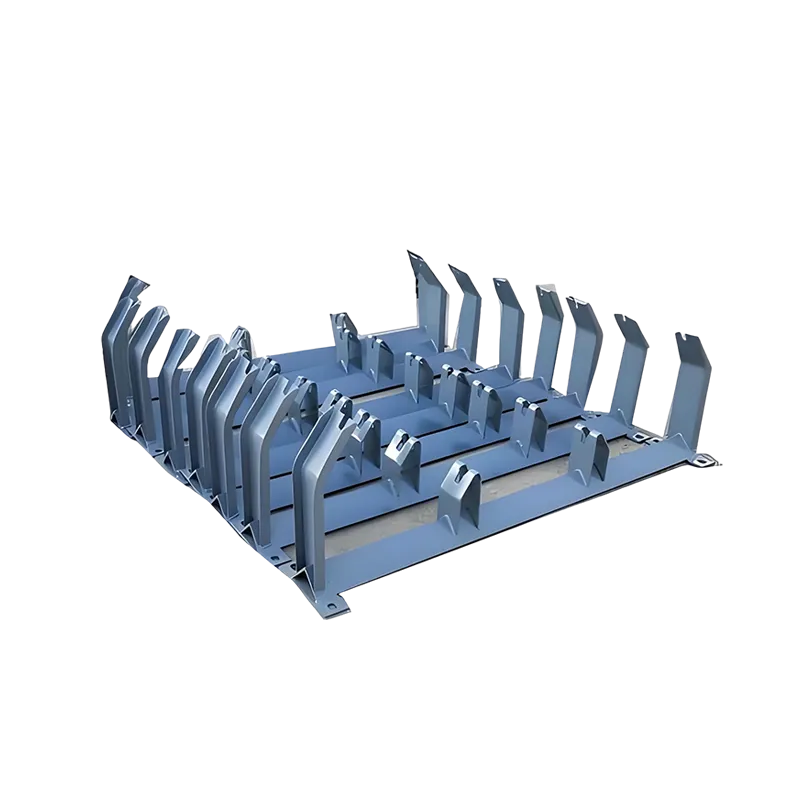
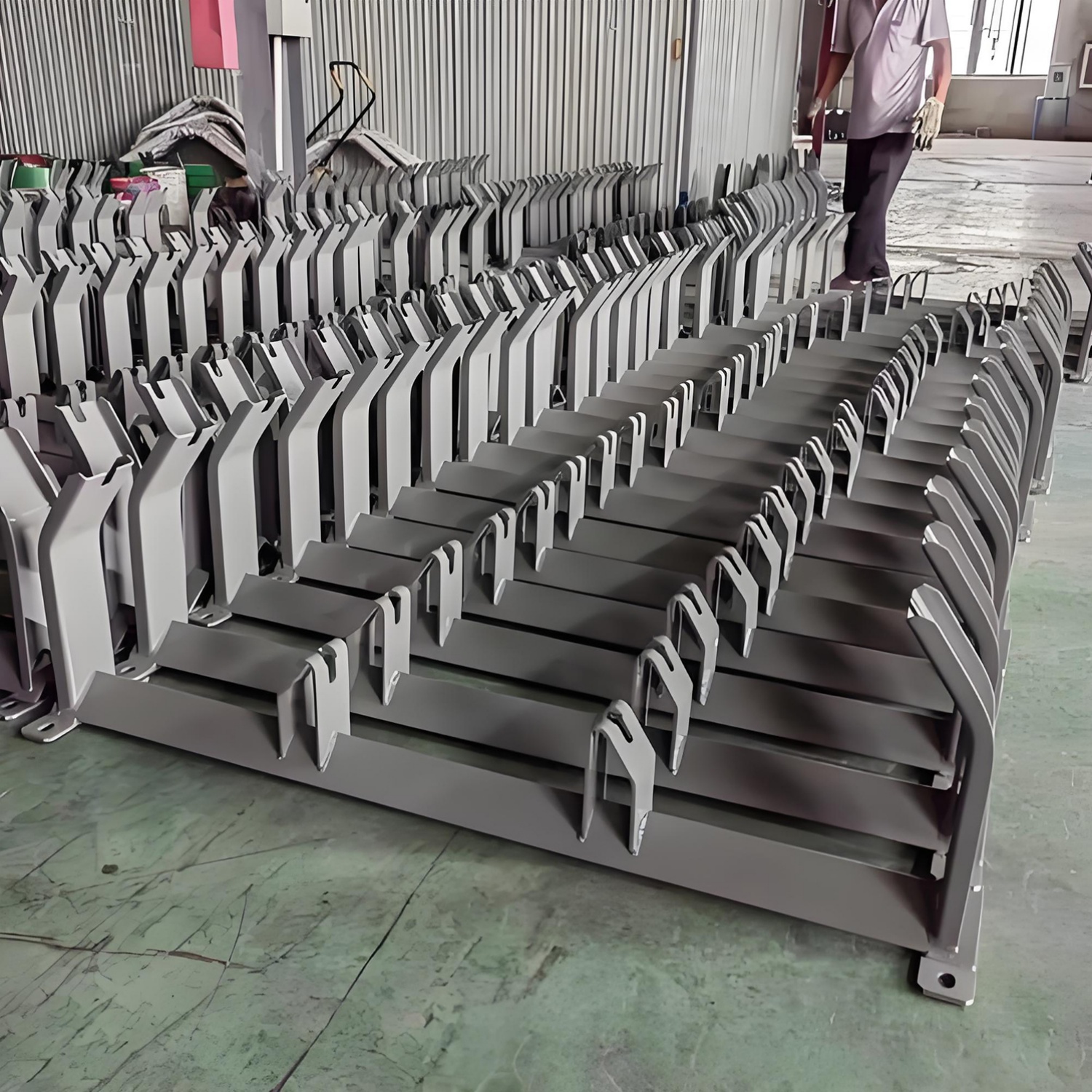
Conveyor Carrier Roller Idler Frame Idler Bracket
Product Information
Material:
Carbon Steel
Bandwidth:
450-2200
Surface Treatment:
Painting/Hot-dip Galvanizing
Inclination Angle:
0°, 20°, 35°, 45°
Application:
Conveyor System


Idler bracket device facilitates idler replacement and comprises a deflectable idler bracket, a support, a pin, a machine body, an idler, a limiting block, and fasteners. The lower end of the support is connected to the upper end of the machine body with fasteners, and the support is connected to the deflectable idler bracket with a pin. An idler is mounted on the deflectable idler bracket. The deflectable idler bracket has a groove for rotation around the pin, and the idler is installed in the groove. A limiting block controls the deflection angle on the deflectable idler bracket. A pin is provided on the support or machine body for the deflectable idler frame to rotate around it. With the fasteners removed, the deflectable idler bracket can rotate a certain angle around the horizontally fixed pin under the control of the limiting block. A trough-type bracket is a type of idler bracket. Advanced manufacturing processes ensure product quality. Trough-type idlers remove belt contaminants, provide high force delivery and low resistance on inclined belts, resulting in optimal performance. Double-section idlers reduce the pressure points on the conveyor belt from the ceramic idlers. The hollow design of the idlers allows any material adhering to the belt to fall off, preventing adhesion and extending the idler's service life.
Advantages and Functions of idler bracket:
1. Self-aligning idler brackets offer strong support, high flexibility, low friction, and long service life.
2. Self-aligning brackets offer radial runout, flexibility, and axial movement.
3. Self-aligning brackets address five key aspects: dustproof, waterproof, axial load-bearing capacity, impact resistance, and long service life.
4. Installed on both sides of the conveyor belt, they prevent belt misalignment, effectively ensuring smooth and reliable belt operation.
5. The self-aligning effect is significant, and the simple structure fully meets the needs of modern operations.
Precautions of idler frame:
During use, adjusting the idler brackets is crucial to prevent belt misalignment. This prevents material leakage, abnormal wear and damage to equipment, reduced productivity, and disruption of the entire equipment's normal operation.
Recommended products
Recommended products


