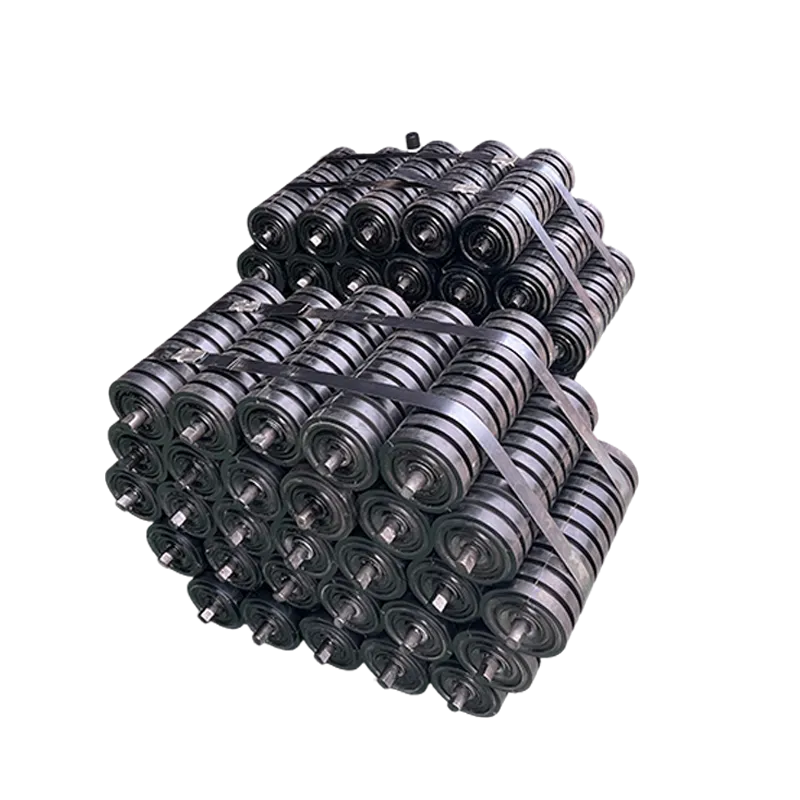
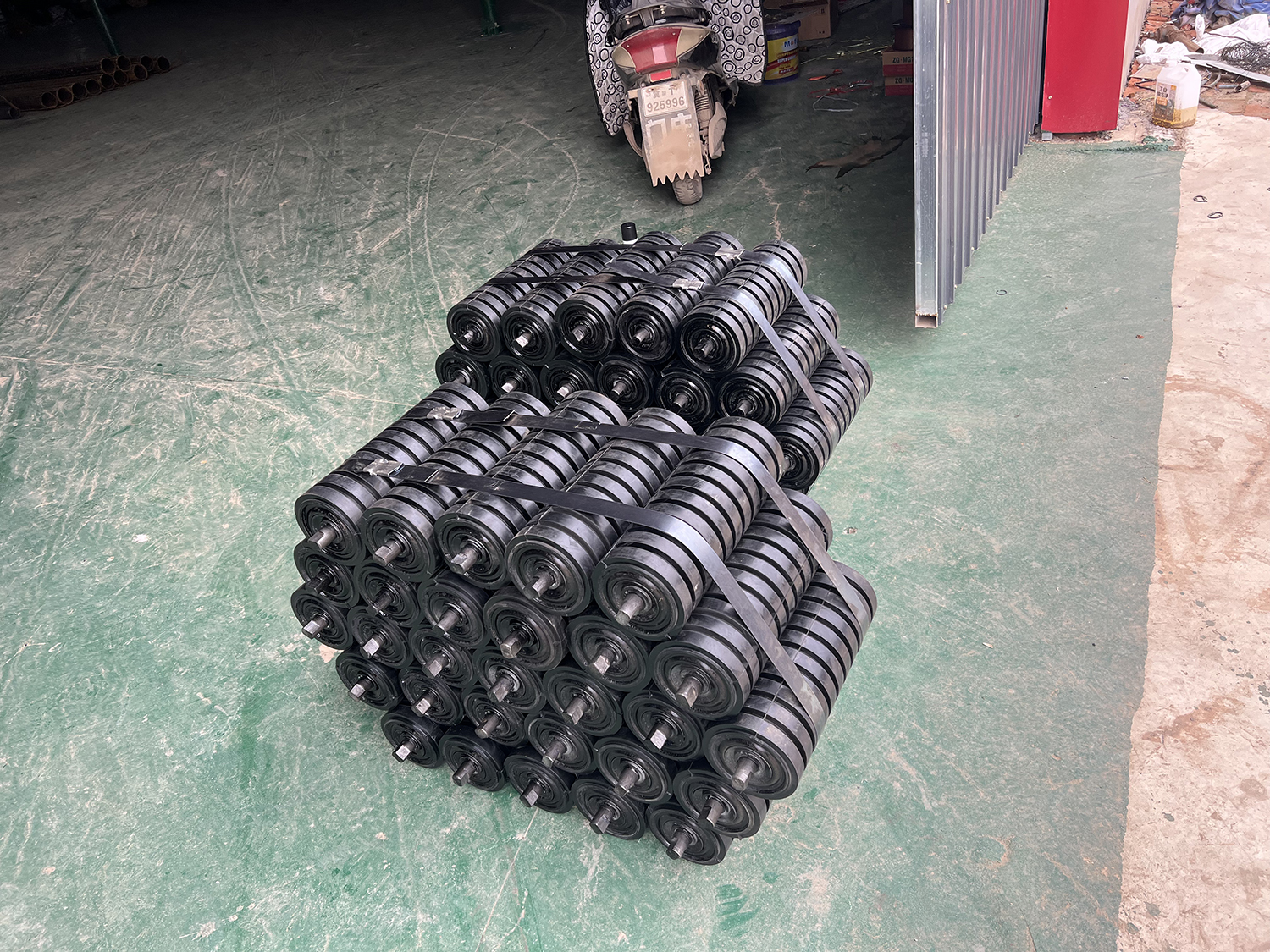
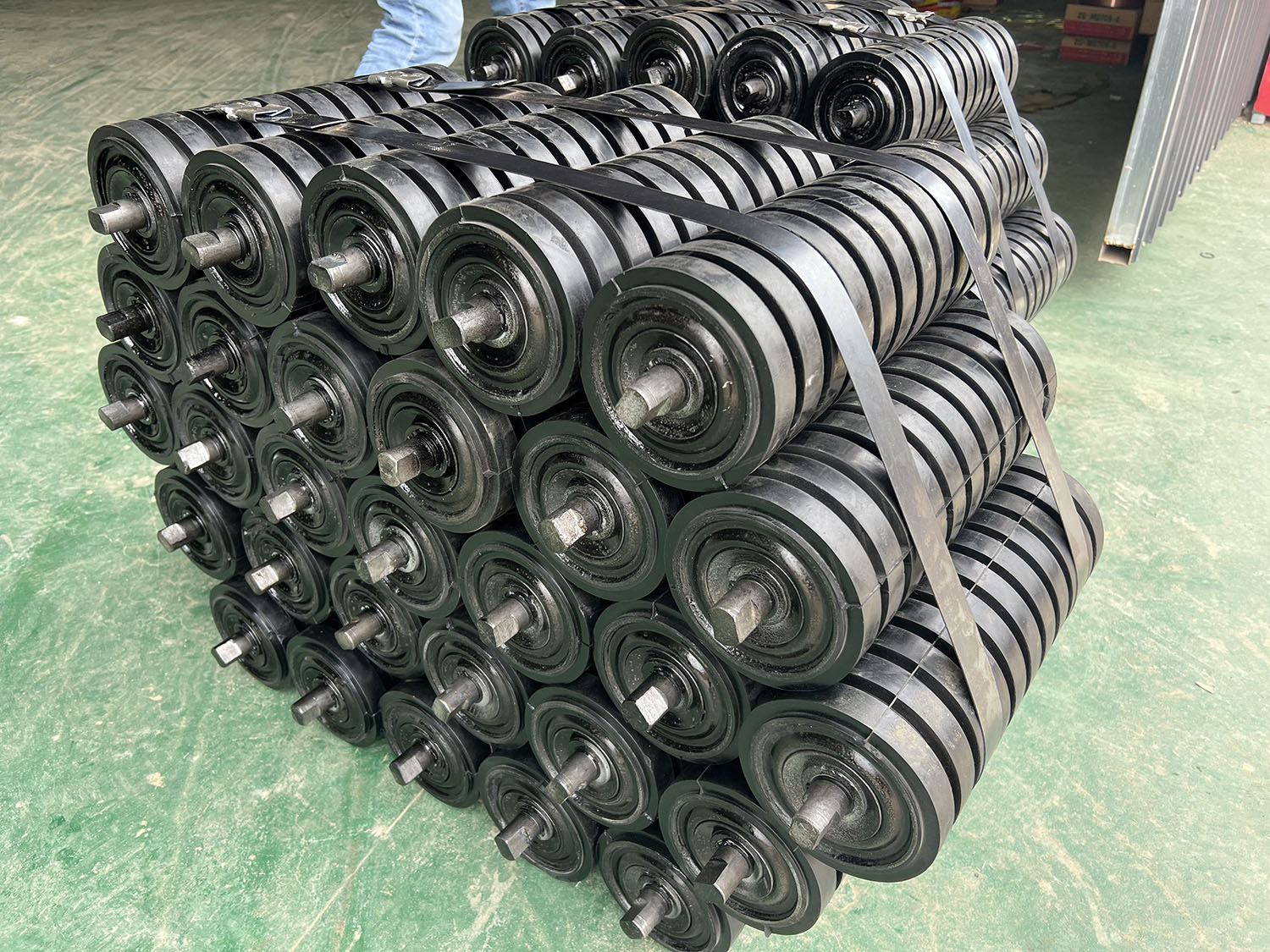
Buffer Idler Wheel Impact Idler Roller for Mining Industry Conveyor
Product Information
Material:
Iron, Carbon Steel
Pipe Thickness:
3mm, 3.5mm, 4mm, OEM
Shaft Diameter:
20mm, 30mm, 35mm, 40mm
Diameter:
76-219mm
Applicable Industries:
Manufacturing Plant, Mining Industry


Impact idlers are used at the receiving point of belt conveyors to reduce the impact of falling material on the conveyor belt. They are a type of idler primarily developed for corrosive environments such as coal washing plants, coking plants, and chemical plants. They possess toughness more than 10 times that of ordinary metals, a lifespan five times that of traditional idlers, and are characterized by corrosion resistance, flame retardancy, antistatic properties, and light weight. They are widely used in mining. The roller body is made of a special polymer material with mechanical properties similar to bronze, exhibiting excellent wear resistance and good self-lubricating properties, without damaging the belt. Buffer idlers have superior corrosion resistance. The roller body and seals are all made of polymer materials, making them corrosion-resistant. In corrosive environments, their service life can reach more than five times that of ordinary idlers.
Performance and Advantages of Buffer idler:
Buffer idlers are lightweight and have low rotational inertia. The special polymer material used for idlers is lightweight, with a specific gravity one-seventh that of steel. Idler rollers made from this material weigh about half as much as ordinary idlers, have low rotational inertia, and low friction between the idler and the belt.
Applications of Impact idler:
Buffer idlers are installed below the receiving section of a conveyor to reduce the impact of material on the conveyor belt during material drop, thereby extending the service life of the conveyor belt. The spacing of buffer idlers is generally 100-600 mm.
Recommended products
Recommended products


